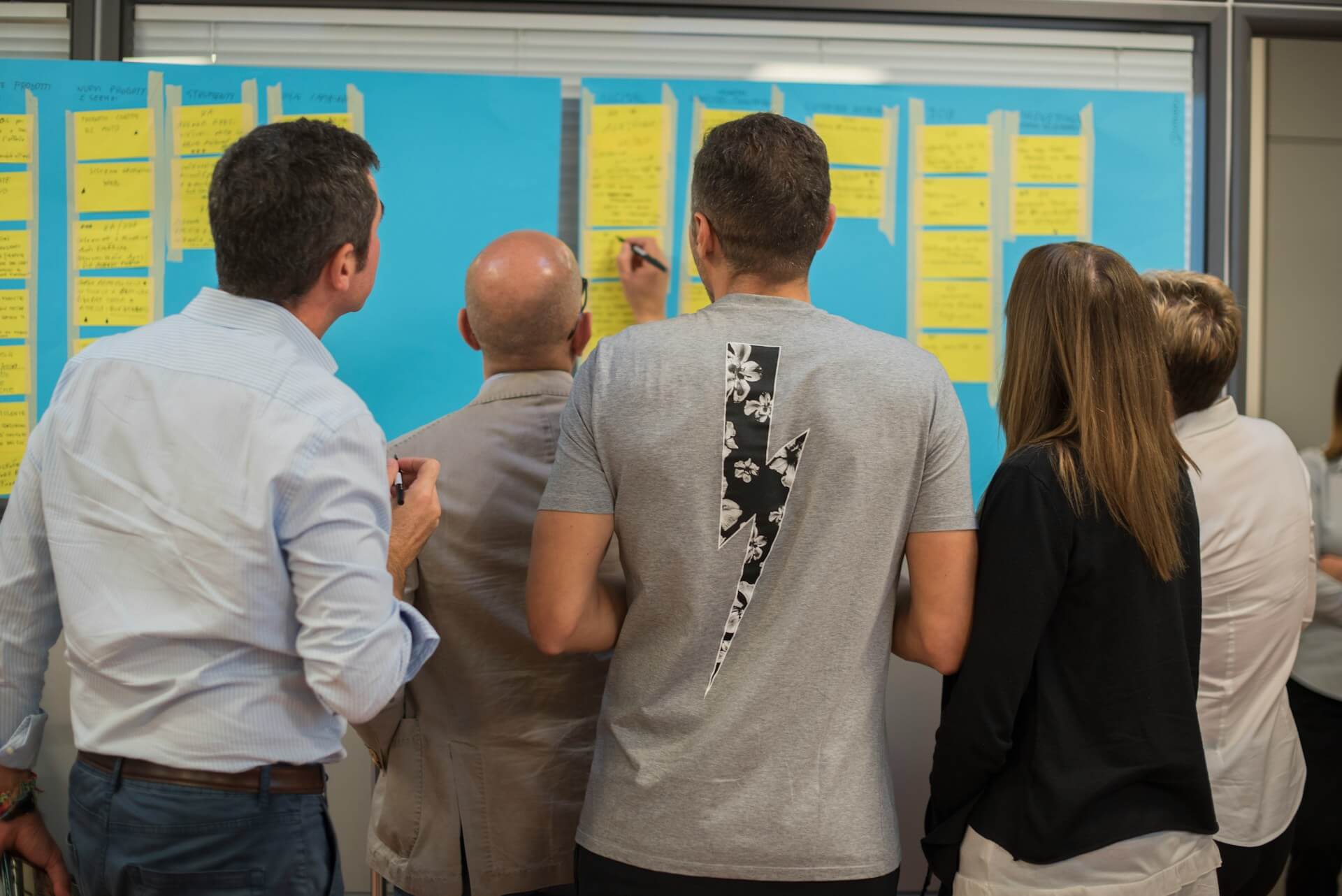
Large website redesign projects include multiple stakeholders. A common point of tension between stakeholders is the fate of the content. People have ideas, fears, and dreams about what will become of the content. Since stakeholder alignment is key to a successful redesign project, here’s my perspective on this tension, and what could be done to ensure: 1. the content supports business goals, 2. people feel heard, 3. everyone’s on board with the strategy.
The fate of the content 🔮 Keep? Remove? Update?
If you were part of a meeting to discuss website content in the context of a redesign, here’s what you’d hear:
- How much content exists in the current site? (I’ve been on projects with thousands of pages*)
- *What content types do we currently have? Do we need new content types? (content types: pages, posts, locations, products, reviews)
- How much of the existing content will continue to live on in the new website?
- What’s the criteria for what content we keep?
- How do we decide what to remove?
- Where will we store these decisions?
- When do we need to make these decisions by, so as to not push the timeline?
- Who needs to be involved in content decisions?
- Who will write/create the new content?
- What will be the content workflow (also known as content governance) to avoid duplicate efforts and delays?
- Will different content types require different workflows/approval processes?
- How will we ensure quality control during and post launch?
People will have opinions about the fate of the content
The list of questions above reflects some of the decisions that need to be made when launching a new website.
These discussions can get heated 🥵
Content is information that people created, or, in the case of AI-generated copy, that people planned and reviewed (hopefully). Content is a product of, say, Ellie’s brain (powered by brainstorming sessions with colleagues, SME interviews, and research) that she spent time and energy on. Ellie was congratulated for the initiative in the company all-hands and in her performance review 2 years ago.
She has strong opinions. I respect that.
I infinitely prefer the heat to not having these conversations at all.
Many website redesign projects don’t. Copywriters are involved, but not in content migration decisions, suggesting new content types, discussing technical feasibility with engineering, deciding on workflows, or attributing taxonomies to content types.
- Acknowledging the role of the content (there would be no website without it! nothing to brand! no code!) is step one.
- Having content conversations early on and planning for the implementation of decisions resulting from these conversations in the project management process is step two.
I <3 stakeholders
Stakeholders sometimes make our jobs harder, amirite?!
I am right if we consider our job getting as close as we can to objective perfection.
Having everyone on board is much better than having the most intuitive navigation structure with the clearest terms that passes every item on an imaginary “good UX” checklist. Better because we want to contribute to a positive working environment, yes, but also better because one positive change to the live site is better than an entire folder full of straightforward navigation menus and beautiful wireframes and clear content.
One positive change to the live site is better than an entire Filma file full of straightforward navigation menus and beautiful wireframes and clear content that never meet a user’s eyeballs.
Getting a team of people to agree to changes that will positively affect user experience, content readability, and the ease of finding information on the site is a big deal. No matter how small the changes may seem or how far from the pixel-perfect, metric-boasting case studies we see on big agency sites or designers’ portfolios.
Key takeaways
- Stakeholder alignment is essential for the success of a website redesign project.
- Engaging in content-related discussions early on and incorporating content activities into the project management plan is key to avoiding duplicate efforts, launching on time, and creating an outstanding site that clarifies and converts.
- Content discussions can get heated and stakeholders can have strong opinions.
- Content decisions in large website redesign projects relate to the amount of content, content type requirements, what will be migrated and not, evaluation criteria for migrated content, involving stakeholders from relevant departments, content workflows and governance structure to prevent duplicate efforts and streamline the approval process, ensuring quality control.
- Having everyone on board is much better than having the most intuitive navigation structure with the clearest terms that passes every item on an imaginary “good UX” checklist.
- People can be reluctant to make content decisions for all sorts of reasons. Every reason is inherently valid and worth listening to, understanding, and iterating upon as needed.